Highlights
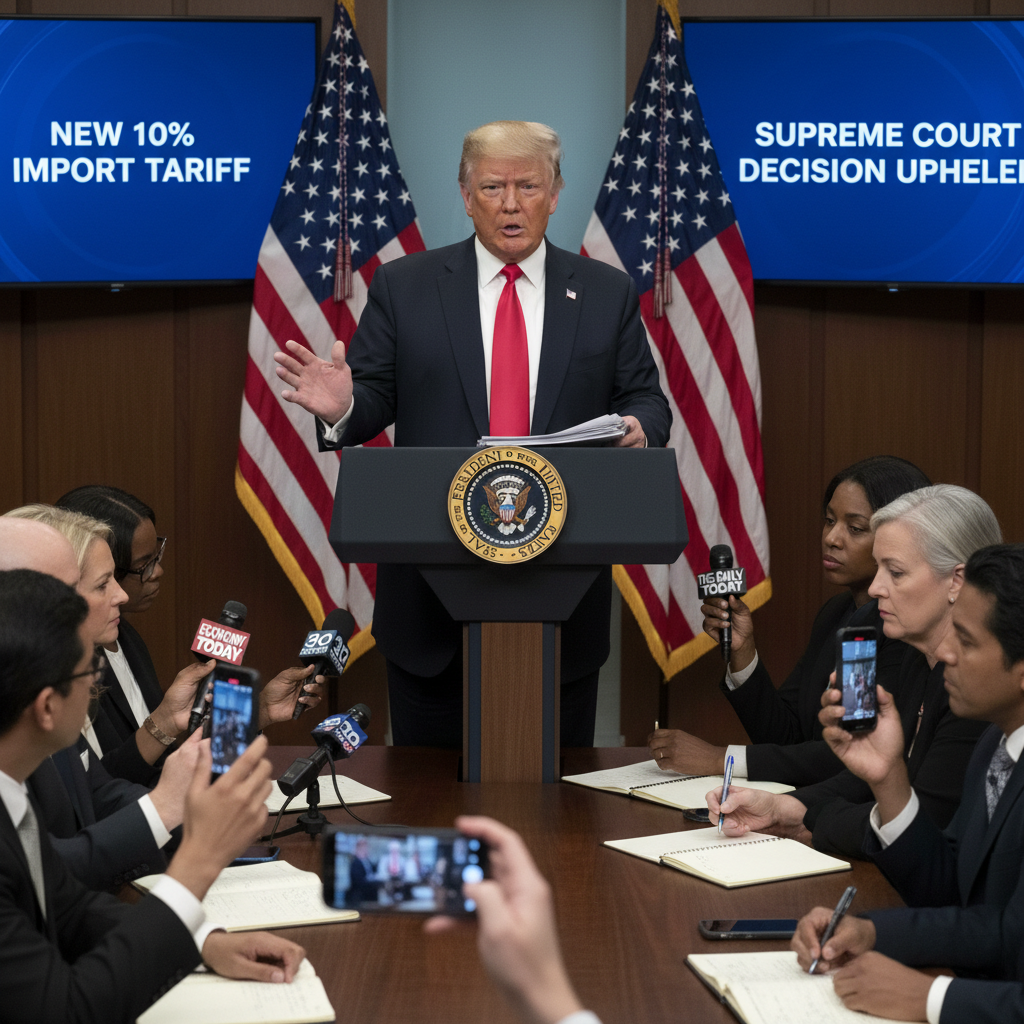
- President Trump imposes a new 10% global tariff following a Supreme Court ruling against previous tariffs.
- The ruling favored businesses and states, opening the pathway for significant potential tariff refunds.
- Trade partners brace for uncertainty as the Trump administration explores different legal avenues to maintain tariffs.
Unpacking the Tariff Controversy
In a significant escalation of his trade policy, President Donald Trump has introduced a new 10% global tariff that replaces tariffs deemed unconstitutional by the U.S. Supreme Court. This move comes on the heels of a 6-3 ruling, marking a watershed moment in the administration’s long-standing tussle over trade regulations. The Court’s decision, which declared that Trump overstepped his authority, was hailed as a victory for U.S. businesses and states that had challenged the tariffs. By potentially reversing billions in tariffs, the ruling not only alters the landscape for American companies but also introduces new dynamics into international trade agreements.
The importance of this ruling cannot be overstated. It represents a pivotal moment in the way the American government regulates trade and interacts on the global stage. By striking down the tariffs, the Court reinforced the notion that Congress has ultimate authority in trading and tariff matters, leaving businesses and foreign partners grappling with the implications of an unpredictable trade environment. As debates arise concerning the balance of power within the government, the ruling’s effects will resonate widely across multiple sectors.
Digging Deeper into the Legal Battle
The underlying arguments against the tariffs primarily centered around the legality of the International Emergency Economic Powers Act (IEEPA), which Trump used to justify the import taxes. Critics, including state representatives and small business owners, accused the administration of overreaching. They contended that the law does not explicitly grant the president the power to impose tariffs, leading to the Court’s interpretation that the authority must be clearly defined and limited. Chief Justice John Roberts, asserting that Congress retains the prerogative for tariff impositions, placed emphasis on the importance of legislative clarity in matters of trade.
In stark contrast, the President expressed his outrage regarding the decision, labeling the justices, including the conservative appointees, as “fools” and alleging disloyalty to the Constitution. While Trump maintains that tariffs are essential for encouraging domestic manufacturing and investment, his administration’s continued pursuit of trade taxes faces backlash from a myriad of sectors—ranging from agriculture to pharmaceuticals, all fearing price hikes spurred by additional levies. The new tariff structure, slated to go into effect on February 24, includes various exemptions but ultimately raises questions about its efficacy and the complications it may further embroil.
Future Implications and Responses
The imminent global 10% tariff casts a wide net, affecting numerous countries and complicating trade relationships. While Canada and Mexico benefit from exemptions under the USMCA, other trading partners like the UK and the EU face the prospect of new tariffs that diverge from pre-negotiated deals. Analysts suggest the Trump administration may rely on alternative legal mechanisms, such as Sections 232 and 301, to fine-tune its tariffs, which raises concerns for the stability of both U.S. and global markets. As companies like Costco and Alcoa rush to contest tariffs legally, uncertainty looms regarding the reimbursement pathway for the hundreds of millions in duties already collected.
The long-term implications of these tariffs are yet to unfold. With the potential for extensive litigation and the unpredictable nature of government responses, businesses are left cautiously optimistic. Experts argue that while ensuring refunds may prove challenging, establishing non-litigious avenues for refunds could alleviate some of the burdens on firms. As the economic landscape becomes increasingly complex, stakeholders will need to navigate these changes thoughtfully.
In summary, President Trump’s imposing a new global tariff revives an old debate about the limits of presidential power over trade. The Supreme Court’s ruling has provided an unexpected victory for U.S. businesses, yet the administration’s quick pivot towards new tariffs signals an ongoing struggle in trade policy. How will businesses adapt to these changes, and what are the broader implications for U.S. relations with its trade partners? What strategies might emerge to resolve these conflicts without lengthy legal battles?
Editorial content by Peyton Hawthorne